Sunday, October 2, 2016

Reduced Releases from Salmon River Reservoir to Conserve Water

Drought Forces Temporary Closure of Lower Fly Section to Protect Salmon Run

Ongoing drought conditions in the Salmon River watershed have forced Brookfield Renewable in collaboration with the New York State Department of Environmental Conservation (DEC) to reduce the amount of water released to the Salmon River from the Salmon River Reservoir starting Thursday, September 29.

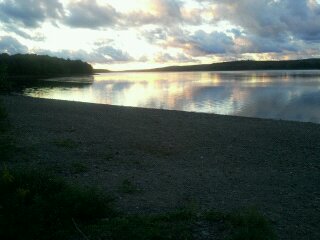
Boat launch in Redfield 2 weeks ago. 
Now 25' from end of ramp to waterline. 
In addition, DEC will close the Lower Fly Fishing Area on the Salmon River in conjunction with the reduced flows. This closure applies only to the Lower Fly Area, and the remainder of the 13-plus miles of the river accessible to the public will remain open.

"New York's fish hatchery system is a vital part of our effort to sustain our popular and economically important recreational fisheries," said DEC Commissioner Basil Seggos. "The reduced water flows and closure will help ensure that adequate numbers of salmon enter DEC's Salmon River Hatchery in order to provide eggs for salmon stocking that support Lake Ontario and tributary fisheries."
A 2007 study estimated the value of these fisheries to New York State's economy at $12.9 million. DEC is concerned that unintentional fishing mortality of Pacific Salmon could impact egg take operations if too much water is released.
The parking area at Rt. 285 and R.t 17 in Redfield.

The ¼-mile section of the Salmon River that comprises the Lower Fly Fishing Area is located immediately downstream of the Salmon River Hatchery and upstream of the County Rt. 52 Bridge in Altmar. The upper boundary of the area is just downstream from Beaverdam Brook. This location is a staging area for various species of fish, including Chinook and coho salmon, as they prepare to enter the hatchery via Beaverdam Brook. The closure will remain in effect as long as flow reductions are necessary.

Flows will be increased as soon as rainfall patterns change and reservoir water levels necessary to maintain these flows are restored. The Lower Fly Area will be reopened when flows permit and Salmon River Hatchery egg-take operations are completed.
The tree stump in the middle of the cove is now 6' out of
the water, in two weeks time.

Should salmon returns to the hatchery be inadequate, DEC has developed a contingency plan to secure additional salmon eggs from other Lake Ontario tributaries. Further information on these actions can be obtained by contacting the DEC Fisheries Unit in Cortland.

DEC Press Release - 9/30/2016;  (photos by Upland Guide Service - (315)271-1212)

Wednesday, September 14, 2016

September Meetings to Discuss Future Salmon, Trout and Alewife Management

The public will have the opportunity to learn about the status of Lake Ontario fisheries and provide input on future trout and salmon management at public meetings in Oswego, Niagara, and Monroe counties this September, New York State Department of Environmental Conservation (DEC) Commissioner Basil Seggos announced today.

"Lake Ontario and its tributaries provide world-class angling opportunities," Commissioner Seggos said. "Under Governor Cuomo's NY Open for Fishing and Hunting Initiative, salmon and trout fishing in Lake Ontario have never been better. New York is committed to ensuring the ecological, recreational and economic benefits of Lake Ontario's sport fisheries are sustained for generations to come."

Recent studies have shown that Chinook salmon raised by sportsmen in "net pens" for three weeks prior to stocking survive twice as well as those stocked by traditional, direct stocking methods. In addition, approximately half of the Chinook salmon in Lake Ontario are naturally reproduced, "wild" fish. In addition, New York and the Province of Ontario stock a combined 2.36 million Chinook salmon each year. Improved survival of pen-reared fish and the contribution of wild fish resulted in an additional six million Chinook salmon per year over the yearly average. While the high numbers of Chinook salmon have produced record-breaking angling, the population is increasing demand on Chinook salmon's primary prey, the alewife.

While the impact of relatively poor alewife survival in two successive winters was not apparent in 2016, DEC experts are concerned with its impact on the size of the adult alewife population in 2017 and beyond, as well as the adult alewife population's ability to sustain the large numbers of trout and salmon in the lake.

Alewife, which have limited tolerance to cold temperatures, are not native to the Great Lakes. The extremely cold winters of 2013/2014 and 2014/2015 resulted in poor survival of alewife produced in those years.

The meeting dates and locations to discuss the issues are as follows:

Monday, September 19: 6:30-9 PM at the Cornell Cooperative Extension Building, 4487 Lake Avenue, Lockport, Niagara County. The meeting is co-hosted by Niagara County Cooperative Extension and the Niagara County Sportfishery Development Board.

Tuesday, September 20: 6:30-9 PM at the Sandy Creek High School auditorium, 124 Salisbury Street, Oswego County. The meeting is co-hosted by the Eastern Lake Ontario Salmon and Trout Association.

Tuesday, September 27: 6:30-9 PM  at the Town of Greece Town Hall, 1 Vince Tofany Blvd., Monroe County.  The meeting is co-hosted by the Monroe County Fishery Advisory Board.

Staff from DEC will present information, and the audience will have ample time to ask questions and provide input on potential management actions. Background information for these meetings can be found at DEC's website. Those who cannot attend a meeting can provide comments at fwfishlo@dec.ny.gov through October 14, 2016. For further information contact Steven LaPan, New York Great Lakes Fisheries Section Head at Cape Vincent Fisheries Research Station, (315) 654-2147.

Sunday, July 10, 2016

A little bragging

Sometimes you do something that you feel good about, something you're a little proud of yourself about.  The bass I caught yesterday was one of those things.

I spent a few years fishing in a national bass fishing circuit and learned a lot and had a great time.  That knowledge learned about a fish, their habits and tendencies can be the difference in a fun day fishing and a great day fishing.  Yesterday evening I threw my stuff into the Tahoe to spend the evening fly fishing one of the local trout streams.  When I hit the end of my street I changed my mind and decided, since I had some bass fishing gear with me too, I would head to a small dam about 10 minutes from my house and see how the bass fishing was.  I have fished this area many times for both trout and bass with good success on both.

Nice 4 lb. largemouth bass on
10 lb. test and a Senko
When I got there I grabbed my spinning rod and set it up with a 6" Senko without weight.  My plan was to cast it on top of the weeds and lily pads and just work it on top.  Nothing for about 20 minutes.  I moved to a more open piece of water and change technique, swimming the same set up along the front edge of the junk and about 3-4" under the surface.  Good call as my clients would say.  As I was watching the Senko coming back to me I was watching the wake it was pushing and then saw as slight swirl in the wake.  I didn't feel the take so I waited a second or two and set the hook on a tournament quality bass. 

When I got the bass in hand and snapped a couple pictures I did feel pretty good about myself.  Next time I'm gonna try for him with a fly rod.

Hope you enjoy the fishing, where ever you wet a line.

Tight lines

Monday, July 4, 2016

July 4th fishing report

Have fished the local streams here around the Salmon River area and have had good results.  The water is low and temperatures are hovering in upper 60s - low 70s.  Most fishing is early to late evening.  Local trout streams such as the Mad River and the West Branch of the Fish Creek are doing well, with the Fish Creek producing more fish.  I picked up another Atlantic Salmon in Fish Creek my last outing, making 3 consecutive Atlantics in 3 consecutive trips.  These have been nice fish in the 12"-13" range.  Most likely these fish are from the 2010 stocking.  Because of the possibility of catching these in Fish Creek I have gone to and would encourage you also to use barbless hooks, just mash them with your forceps.

I fished the Redfield Reservoir last evening for bass, did ok, not great.  The area I fished was in the bay at the Redfield boat launch and it was busy with holiday boaters so most likely the bass were put down with all the commotion.  The reservoir is close to full pool so plenty of water.  Would be nice to see more of this water in the Salmon River which as I type this is running at 224 cfs with a release at 185 cfs out of the dam at Altmar. 

If you get up this way stop in for a visit.
 Some news from the DEC regarding the Salmon River hatchey.  The project to remove 30+ years of accumulated organic buildup, remove several nonfunctioning valves, and install new valves on the two mile long pipeline that runs from the Lower Salmon River Reservoir to the Salmon River hatchery is under way. The cleaning process (pigging) uses a foam bullet-shaped cleaner called a "pig" that can be sent through the line to remove any accumulated debris. Crews are hard at work replacing old valves and installing new ones and expect to begin pigging sometime after July fourth. The project goal is to double the existing water flow from the reservoir to the hatchery. The increased water flow will help the hatchery meet the fish production needs for our fish management programs.

Hope to see you here.

Tight lines

Friday, June 24, 2016

Fish for free in New York, and other things to do...

Summer is here and this last weekend in June is one to take advantage of.  June 25,26, 2016 is fish for free days here in New York state.  Many opportunities are available to the angler who wants to give it a try.  This past weekend the statewide season on large and smallmouth bass opened and there are hundreds of lakes and streams that are accessible to anglers.  In my home area one of my favorite places to find cooperative bass is the Redfield reservoir.  With canoe or from shore this is an impoundment that willingly gives up bass, both largemouth and smallmouth, to any angler who wants to catch fish. I tend to like the boat launch area at Redfield, plenty of shoreline to walk and fish.  Spinner baits and top water work well here as does a good old-fashion Texas rigged worm.

June 25, 2016 is also the date of the annual Spey Nation spey clave held on the Salmon River at the Pineville drift boat launch.  This is a free event and this year they are encouraging you to bring a friend.  There will be items up for raffle and all proceeds go to the Fish Creek Atlantic Salmon Club.

This club was established in 1997 and it's mission was to re-establish the Atlantic salmon population in Fish Creek, both East and West branches.  From my experience on these creeks as well as the Mad River which connects to the West Branch of Fish Creek, they are having good success.  Since 2010 I have regularly caught Atlantics in both the West branch of Fish Creek and the Mad River in Camden, NY.  In the past week I have landed 2 nice Atlantic, both in the 12"-13" range and both healthy, hard fighting fish.

Landed this Atlantic a little over a week ago
on a #16 tan caddis pattern.  Solid 13" fish.


Local streams are low water  conditions and most trout are confined to the deepest, coolest pools in any creek or river right now.  Good insect hatches are showing up mainly after 7:30 pm.  In the local waters the primary bug right now is the small tan caddis and the emerger of the fly is getting most of the attention.  We have some Light Cahill's and a few Sulphur's showing up but these seem to be ignored by most trout.  Small tan Elk Hair caddis patterns in #16 work on the surface but a tan x-caddis in size #14,16 fished under the surface is dynamite.  Fish for cast some evenings with this presentation.

Fishing on the Delaware River has been decent but with low water, warming water and algae in the upper West Branch finding places to fish has been the challenge.  Always have a 'plan-B' to go to.  Most surface action is later in the day as the sun drops behind the hills.  Good Sulphur hatches are consistently popping everyday as well as some Light Cahill's, BWO and Iso's .  I have good mid-week date open if you'd like to give it a go.

We need rain to help the creeks and fish, but don't let that stop you from taking advantage of the fishing opportunities this summer.

Tight lines

Tuesday, April 19, 2016

Spring 2016 report, steelhead, trout and turkeys

A cooperative steelhead, released to play again.
Steelhead fishing has been kind of nice, the weather has been beautiful and the water is up.  As I type this the release is 750 cfs and has been since the 15th.  The gauge at Pineville is reading 927 cfs and has been slowly, steadily dropping.  Drop back fishing is good right now and most spawning fish are disappearing from the spawning areas.  Water temps are not oppressive and the steelhead seem to be comfortable holding in the river for now.  Still a couple weeks left to chase steelhead.


Blue Quill from Mad River
Local trout streams are fishing well.  On the Mad River behind my house the are daily Hendrickson hatches and have been for about a week and a half.  This is a little early for them here in this part of the state but with the early warm up we began to have about 3 weeks ago the bugs are showing up early.  Decent number of Blue Quill showing up too.

Nice state land gobbler
May 1st is the opening day of the NY State spring turkey season. I look forward to this every year and this year is no different.  2 year old turkeys have recruited well give the milder than normal winter  and nice sized flocks are everywhere right now.  We have a lot of public land in this part of NY and the hunting pressure for turkeys on state land is moderate to light in my opinion.  Most of our turkeys from guided hunts come from state land like the one pictured below.

I am offering guided float trips on the Upper Delaware River this year.  I have played on the Delaware for many years and decided to extend my guide season by booking trips on the Delaware. I have my Parks permit now so the entire system is open for me to guide.

If you would like to float the Delaware contact me by phone or email and let's set something up.

Tight lines.


Thursday, March 31, 2016

Spring is here, what to expect

After a milder than normal winter here in Salmon Country, much to the dismay of the snowmobilers, spring arrived with little change in the weather.  The less than usual snow fall in the Tug Hills meant that there is no spring run off to blow the river out as would usually happen in about a week or so.  For most of February and the first three weeks of March the release was between 1500 cfs and 1750 cfs.  As of this past Saturday the release is dropped to 500 cfs and the gauge at Pineville reads 826 cfs, very fishable, but not a good sign of things to come.

This kind of flow right now is probably going to stay until the hatchery gets their fish for stripping steelhead eggs this spring.  Once they have what they need the water will more than likely drop if we don't get some steady rain.  Water dropping means several things, the drop backs already in the river will expedite their exit from the river early, the steelhead left spawning will be easy pickings for the 'less than ethical angler' and my drift boat is going to take a beating on the chines.  None of which are good for business.

As for the spring steelhead fishing, it has been quietly slipping by.  There are steelhead in the usual spawning areas on the main river and some of the diversions still have a few fish in them.  As usual, swinging Alvin patterns is working well as are most egg and bugger patterns.  Large, meaty stone fly nymph, in sizes #4-#10, are also producing on the drop backs.  With water levels as they are these patterns don't require a lot of weight, if any.
John Barr's Slumpbuster. - Photo by Tightlines Production

April 1, 2016 is tomorrow and that means NY State trout season for inland waters opens.  Seems it will be the usual cool, rainy start and by Saturday and Sunday it will feel like winter steelhead fishing out there.  Steamers will be on the end of my fly line, a wooly bugger or olive matuka probably.  I am going to try a pattern called the Slumpbuster.  I saw this pattern tied on Tim Flager's,  Practical Patterns Vimeo site.  The real beauty of this pattern is it's simplicity to tie, if it catches me a fish, all the better.

Tight lines.